
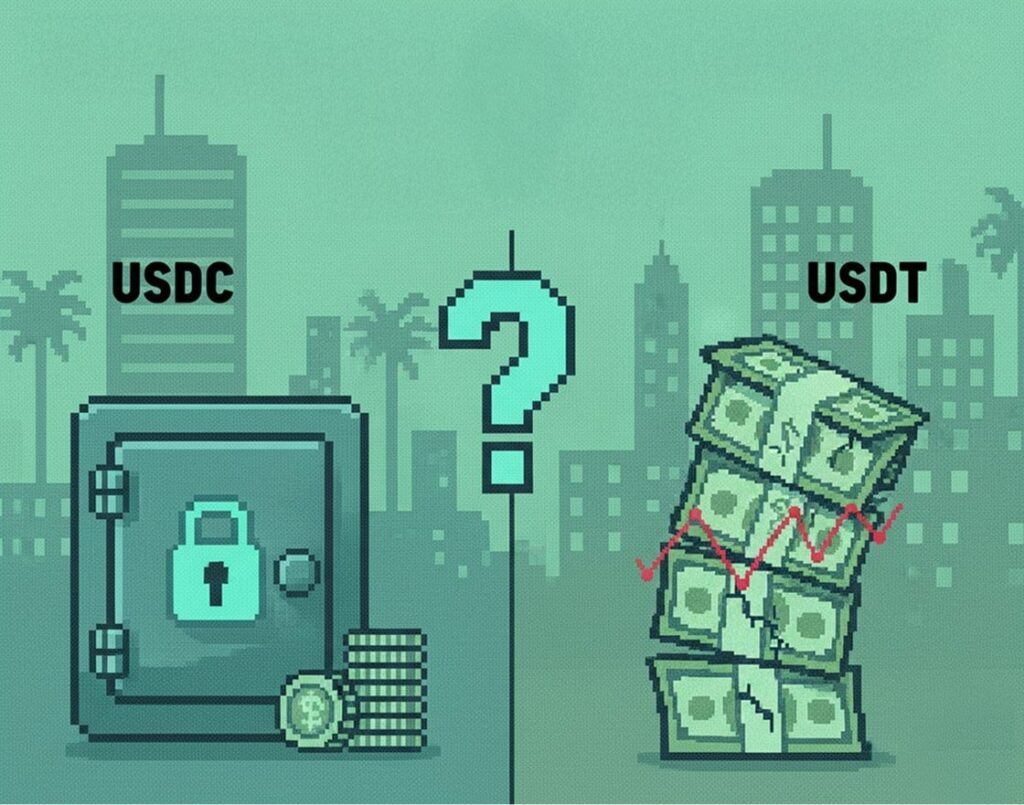
USDC vs USDT: Which Stablecoin Should You Trust in 2025?

Published on

Updated On

Steven Wong

Key Points

  • USDT (Tether) has the largest market cap at ~$95B+ but faces transparency concerns
  • USDC offers superior regulatory compliance and monthly audited reports
  • USDT provides maximum global liquidity and trading volume
  • USDC is preferred by U.S. institutions for its transparent backing
  • Your choice depends on whether you prioritize liquidity (USDT) or compliance (USDC)

If you’re trying to figure out the USDC vs USDT debate, you’re probably drowning in all the information and technical jargon… without actually answering the question you came here with: which one should you actually trust?

Here’s the deal with stablecoins – they’re fiat-backed digital assets designed to hold steady value, usually pegged to the U.S. dollar. Think of them as crypto’s attempt at creating digital cash that doesn’t swing wildly like Bitcoin or Ethereum. USDT (Tether) and USDC dominate this stablecoin market, but they’ve got very different reputations when it comes to transparency, regulatory compliance, and trustworthiness.

USDT has been around longer and has massive trading volume, but it’s got a sketchy past with reserve transparency. USDC is the newer, more compliant option that financial institutions love, but it doesn’t have quite the same liquidity everywhere. The choice between these two regulated stablecoin options isn’t just about market cap – it’s about what you value more: maximum liquidity or maximum transparency.
We’ll cut through the noise and give you a clear comparison so you can pick the right fiat-backed stablecoin for your specific needs, whether you’re trading, investing, or using Hermes Bitcoin’s services.

Quick Comparison Table

USDT (Tether) has the largest market cap at ~$95B+ but faces transparency concerns

FeatureUSDT (Tether)USDC (USD Coin)
IssuerTether LimitedCircle (with Coinbase)
Market Cap~$95B+ (largest stablecoin)~$25B+ (second largest)
BackingCash + equivalents + other assets100% cash + short-term U.S. Treasuries
TransparencyLimited attestationsMonthly audited reports
RegulationLess regulated, scrutiny issuesFully regulated, U.S. compliant
Trading VolumeHighest globallyHigh, but less than USDT
Best ForGlobal trading, maximum liquidityU.S. users, institutions, compliance

What Is USDT (Tether)?

USDT is the granddaddy of usdt stablecoins – it launched in 2014 and still dominates the stablecoin market with the highest market capitalization. Think of Tether as crypto’s most widely accepted digital dollar, especially in international markets and DeFi protocols. Here’s what makes USDT attractive: it’s everywhere. When you want to buy usdt, you’ll find it on virtually every crypto exchange, trading platform, and DeFi protocol worldwide. The trading volume is massive – we’re talking hundreds of billions in daily transactions. If you need to move large amounts quickly or trade on obscure exchanges, USDT’s liquidity is unmatched.
Important Note: USDT has faced regulatory scrutiny over the years for not being fully transparent about their reserve assets. They’ve paid hefty fines and admitted their reserves weren’t always 100% backed by cash like they claimed.
But – and this is a big but – USDT has baggage. Tether Limited has faced regulatory scrutiny over the years for not being fully transparent about their reserve assets. They’ve paid hefty fines and admitted their reserves weren’t always 100% backed by cash like they claimed. The company has improved their transparency lately, but that history of questions around asset transparency still makes some investors nervous. Despite the controversies, USDT remains the king of stablecoins because traders value liquidity over everything else. When you’re trying to exit a position fast or trade on international exchanges, USDT is often your best option.

What Is USDC?

USDC is the clean-cut alternative that launched in 2018 through a partnership between Circle and Coinbase. If USDT is the scrappy street fighter, USDC is the regulatory compliance honor student that financial institutions actually want to work with.

The transparency usdc offers is night and day compared to early USDT. Circle publishes detailed monthly attestations showing exactly what backs each USDC token – and it’s pretty much what they promise: cash and short-term U.S. Treasury bonds held in regulated U.S. financial institutions. No mysterious “commercial paper” or other questionable reserve assets.

This regulated stablecoin approach has made USDC the favorite among U.S.-based institutions, traditional finance companies dipping into crypto, and anyone who prioritizes regulatory compliance over maximum trading volume. Major payment processors, banks, and even some government entities are more comfortable working with USDC because of its transparent backing and regulatory standing.

The trade-off? USDC doesn’t have quite the same global reach as USDT. While it’s widely available, you might find fewer trading pairs or slightly less liquidity on some international exchanges. But for most users, especially those in the U.S., this isn’t a practical problem.

USDC vs USDT — Head-to-Head

Let's compare these stablecoins where it actually matters for real users:

Transparency and Trust

USDC wins this category hands down: Circle provides monthly attestation reports from Grant Thornton showing exactly what backs their tokens. USDT has improved but still doesn’t match USDC’s level of financial transparency. If you’re the type who wants to see the receipts, USDC is your pick.

Liquidity and Trading Volume

USDT dominates here: Its trading volume across all markets – especially in Asia and on smaller exchanges – is significantly higher than USDC. When you need to make large trades without moving the price or access obscure trading pairs, USDT’s liquidity advantage is real.

Regulatory Standing

USDC is the clear winner for regulatory compliance: It’s regulated as a money service business in the U.S., and Circle works closely with regulators. USDT faces ongoing scrutiny and has been banned or restricted in some jurisdictions. For U.S.-based users or institutions, this matters.

Adoption and Use Cases

USDT still has wider global adoption, especially in DeFi protocols and international trading. USDC is gaining ground fast, particularly in traditional finance integrations and U.S.-based applications. Both work for most crypto use cases, but USDT has broader acceptance.

Risk Profile

Here’s the real trade-off: USDT carries higher counterparty risk due to its reserve composition and regulatory uncertainty, but offers higher liquidity. USDC has lower risk from a regulatory and transparency standpoint but might have slightly less liquidity in some markets.

Which Should You Choose?

The honest answer? It depends on what you’re actually doing with your stablecoin.

Choose USDT if you:

Choose USDT if you:

For most people, either choice works fine for basic crypto activities. The difference matters more for specific use cases like large-scale trading, institutional investing, or navigating particular regulatory environments.

How Hermes Bitcoin Clients Can Use USDC & USDT

At Hermes Bitcoin, we understand that different clients have different needs when it comes to stablecoins. Whether you’re using our ATMs, engaging in OTC transactions, or making wire transfers, both USDC and USDT can serve specific purposes in your crypto strategy.

For clients who want to buy USDT in person, we offer secure, private transactions that let you acquire Tether without the hassle of traditional exchanges. USDT’s widespread acceptance makes it particularly useful for clients who plan to trade across multiple platforms or need maximum liquidity.

If you’re looking to buy USDT in Los Angeles, our local presence means you can complete transactions quickly and securely. The higher trading volume of USDT often makes it the preferred choice for clients who need to move funds internationally or access global DeFi markets.

Hermes Bitcoin Services

  • Sell USDT in person – Fast, secure exit options
  • Buy USDT with cash – Privacy-focused transactions
  • Bank transfers – Flexible acquisition methods
  • OTC Bitcoin services – Better pricing for large amounts
  • Exchange guidance – Understanding OTC vs traditional exchanges
  • Personalized service – Tailored to your needs

For those ready to sell USDT in person, we provide fast, secure exit options that don’t require you to navigate complex exchange procedures. This is particularly valuable when you need to convert your stablecoins back to cash quickly.

We also offer comprehensive options to buy USDT with cash or bank transfer, giving you flexibility in how you acquire your stablecoins based on your privacy preferences and transaction size.

Understanding the difference between crypto exchanges and OTC exchanges helps our clients choose the right method for their stablecoin transactions. For larger amounts or clients who value privacy, our OTC services often provide better pricing and more personalized service than traditional exchanges.

Both stablecoins integrate well with our OTC Bitcoin services in Los Angeles, allowing clients to easily move between Bitcoin and stablecoins as part of their overall crypto strategy.

The key is understanding your specific needs: USDT offers maximum flexibility and liquidity, while USDC provides superior transparency and regulatory compliance. Hermes Bitcoin helps you navigate these choices with secure, transparent transactions regardless of which stablecoin fits your goals.

Contents

Share Article

FAQs

Is USDC safer than USDT?

From a regulatory compliance and transparency standpoint, yes. USDC has better asset transparency, clearer regulatory approval, and more detailed auditing. However, both stablecoins have maintained their peg successfully, and USDT’s larger market cap actually provides some stability advantages. The “safer” choice depends on whether you prioritize regulatory compliance (USDC) or market-proven liquidity (USDT).

USDT got a several-year head start and built massive liquidity across global markets before USDC existed. Its higher trading volume creates a network effect – more exchanges list it, more trading pairs exist, and more DeFi protocols integrate it. While USDC is gaining ground, especially in regulated markets, USDT’s first-mover advantage in the stablecoin market keeps it dominant globally.

Both stablecoins have occasionally traded slightly above or below $1, but neither has experienced a significant or prolonged depeg. USDC’s transparent reserves make it theoretically more stable, while USDT’s massive liquidity helps it maintain price stability through market forces. The bigger risk isn’t losing the peg temporarily – it’s whether the issuer can maintain proper reserves during extreme market stress.

USDT typically wins for international transfers because of its wider global acceptance and higher liquidity on international exchanges. Many Asian and European platforms have deeper USDT markets, making it easier to convert back to local fiat currencies. USDC works well for international transfers too, but you might face slightly higher spreads or fewer exchange options in some countries.

Yes, both stablecoins operate on public blockchains (primarily Ethereum) where all transactions are permanently recorded and traceable. They’re not privacy coins – every transfer, balance, and transaction history is visible on blockchain explorers. The level of traceability is essentially identical between the two, though the regulatory compliance of USDC makes it more likely that exchanges will report large transactions to authorities.

The IRS treats both USDC and USDT as property for tax purposes, meaning you need to report transactions just like any other cryptocurrency. While stablecoins don’t fluctuate much in price, trading them, earning interest on them, or using them for purchases can still create taxable events. Both stablecoins are easily trackable on public blockchains, and exchanges that deal in either typically report large transactions to tax authorities.

Have a Question? We’ve got answers.