
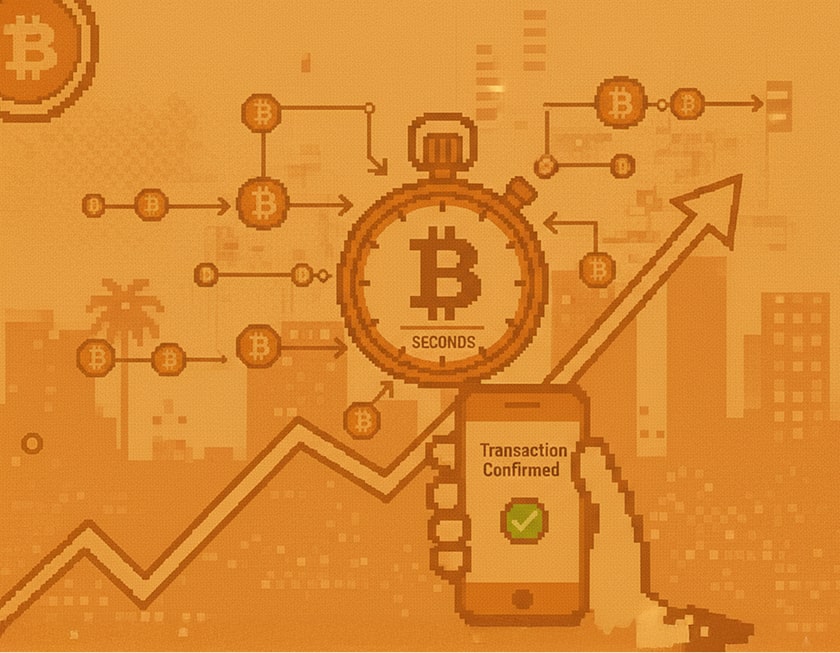
How Long Does A Bitcoin Transaction Take?

Published on

Updated On

Steven Wong

Key Takeaways

  • Most Bitcoin transactions take around 10 minutes for first confirmation on the blockchain.
  • Transaction times vary based on network congestion, transaction fees, and block timing.
  • Hermes Bitcoin ATMs release cash immediately after one blockchain confirmation.
  • You can track your transaction in real-time using mempool.space with your transaction ID.
  • Higher transaction fees can prioritize your transaction during busy network periods.

Let’s face it, when you buy or sell Bitcoin, you’re always wondering… “So when will I actually see my money?” or “When will I actually see that the Bitcoin transaction happened?” It’s totally understandable and I’ve been there.

After all, once you complete a transaction, you want to know when you’ll have your funds.

The Short Answer:Most bitcoin transactions take around 10 minutes to get their first confirmation on the bitcoin blockchain, but the real answer is more tricky. Transaction confirmation times depend on network congestion, transaction fees, and sometimes just plain luck with block timing.

Whether you’re buying Bitcoin and waiting for it to show up in your wallet, or selling Bitcoin and waiting for cash to be dispensed, understanding how long does a bitcoin transaction take helps set realistic expectations. We’ll break down exactly what happens during a Bitcoin ATM transaction and what affects the timing so you’re not left wondering if something went wrong.

How Long Does It Take to Receive Bitcoin After Buying?

When you purchase Bitcoin from a Bitcoin ATM, your transaction gets broadcast to the bitcoin network immediately. But “immediately” doesn’t mean your Bitcoin shows up in your wallet right away – there’s a verification process that needs to happen first.

Here’s what actually occurs: once you complete your purchase, the transaction enters the bitcoin mempool, which is basically a waiting room for unconfirmed transactions. Miners then pick up your transaction, include it in a block, and add it to the blockchain. This process gives you one transaction confirmation, which is when most wallets will show your Bitcoin as received.

Open your wallet app

Your purchase is immediately broadcast to the Bitcoin network

Instant

Enters Mempool

Transaction waits in the queue for miners to pick it up

Instant

Block Confirmation

Miners include your transaction in a new block

Instant

Appears in Wallet

Bitcoin shows up in your wallet after confirmation

Instant

Average Time

~10 min Typical block confirmation time

Instant Confirmation

2-3 min When you get lucky with timing

Worst Case

30+ min During network
congestion

The average block time for Bitcoin is about 10 minutes, so that’s your baseline expectation. But here’s the thing – block times are random, not scheduled. Sometimes you’ll get lucky and a new block gets mined in 2-3 minutes. Other times, you might wait up to 30 minutes or even around an hour in rare cases when the network is really congested.

Wallet Display Differences

Your wallet type matters too. Some wallets show pending transactions immediately (which can be reassuring), while others wait for at least one confirmation before displaying anything. Popular wallets like Exodus or Trust Wallet: usually give you a heads-up that a transaction is incoming, even before it’s confirmed.

Track Your Transaction in Real-Time

If you want to track your transaction in real-time, save your transaction ID from the ATM receipt and check it on mempool.space. This site shows you exactly where your transaction sits in the mempool bitcoin queue and estimates confirmation time based on current network conditions.

How Long Does It Take to Receive Cash After Selling Bitcoin?

When you’re selling Bitcoin for cash at a Hermes Bitcoin ATM, you’re essentially doing the reverse process – but the timing works similarly. You send Bitcoin from your wallet to the ATM’s address, and once that transaction gets one confirmation on the blockchain, the machine dispenses your cash.

The typical wait time is still around 10 minutes, though it can range from a few minutes to 30+ minutes depending on network congestion and the transaction fees you set when sending. If you’re using our Bitcoin ATM withdrawal service, the process is designed to be as smooth as possible once that confirmation comes through.

Here’s what makes Hermes Bitcoin ATMs user-friendly: we don’t add unnecessary delays after your transaction confirms. Once the bitcoin blockchain shows one confirmation for your transaction, our machines release the cash immediately. No extra processing time, no “business day” delays – just straightforward execution once the network does its job.

One thing to keep in mind when sending money through a Bitcoin ATM is that confirmation time isn’t something we control – it’s entirely dependent on bitcoin miners and network conditions. But we make sure that once your transaction is confirmed, there’s no additional waiting on our end.

Why Transaction Times Vary

Bitcoin transaction time isn’t as predictable as, say, a bank wire transfer, and there are good reasons for this variability that have everything to do with how the bitcoin network operates.

Best Case Scenario

2-3 minutes Low network activity, good luck with block timing

Best Case

2-3 min When you get lucky with timing

Worst Case

30+ min During network congestion

Mining Process

First, bitcoin miners don’t work on a schedule. They’re constantly competing to solve mathematical puzzles, and whoever solves it first gets to add the next block to the blockchain. Sometimes they get lucky and solve it in 3 minutes, sometimes it takes 20 minutes – that’s just the nature of the mining process.

Network Congestion

Network congestion plays a huge role too. When lots of people are making bitcoin transactions simultaneously, the mempool fills up with unconfirmed transactions. Miners typically prioritize transactions with higher fees, so if you used a low fee and the network is busy, your transaction might sit in the mempool longer waiting its turn.

Transaction Fees

Transaction fees are basically your bid for priority. During busy periods, paying higher fees can significantly reduce confirmation time, sometimes getting you into the next block instead of waiting several blocks. However, most Bitcoin ATM transactions use reasonable fee settings by default, so this usually isn’t something you need to worry about.

Confirm Before Leaving

External factors matter too. Major market events, news, or even weekends when trading activity spikes can cause network congestion that extends confirmation times across the board.

Factor Low Fees/Activity High Fees/Activity Impact
Network Congestion Faster confirmations Slower confirmations
Transaction Fees Lower priority in queue Higher priority in queue
Block Timing Random (luck-based) Random (luck-based) ---
Mempool Size Quick processing Delayed processing

Understanding Bitcoin ATM limits can also help you plan transactions during optimal times, as smaller transactions sometimes confirm faster during high-congestion periods.

Tips for a Smooth Bitcoin ATM Transaction

Here are some practical tips to minimize issues and make your Bitcoin ATM experience as smooth as possible:

Double-Check Everything

The most important step is verifying your wallet address before completing the transaction. Bitcoin transactions can't be reversed, so sending to the wrong address means your funds are gone forever. Take an extra 30 seconds to verify – it's worth it.

Use Good Wallet

Some wallets are much better than others at showing transaction status. Look for wallets that display pending transactions and provide clear confirmation counts. This gives you peace of mind while you wait.

Keep your receipt until everything clears

The most important step is verifying your wallet address before completing the transaction. Bitcoin transactions can't be reversed, so sending to the wrong address means your funds are gone forever. Take an extra 30 seconds to verify – it's worth it.

Check mempool.space if you're concerned.

If your transaction seems to be taking longer than expected, plug your TXID into mempool.space to see exactly where it stands. You'll get real-time data on network congestion and estimated confirmation times.

Consider timing for large transactions

While Bitcoin ATMs are designed to handle transactions safely regardless of timing, understanding that Bitcoin ATMs are safe but still depend on network conditions can help you plan accordingly for time-sensitive situations.

Stay patient during high-traffic periods

When Bitcoin is making news or markets are volatile, expect longer confirmation times. The network gets busier, and everyone's transactions take a bit longer – it's not a problem with the ATM or your transaction specifically.

Contents

Share Article

FAQs

How many confirmations are needed for a Bitcoin ATM transaction?

Most Bitcoin ATMs, including Hermes Bitcoin machines, require just one confirmation before releasing funds or dispensing cash. One confirmation means your transaction has been included in a block and added to the blockchain, which typically takes around 10 minutes. While some services require multiple confirmations for larger amounts, one confirmation provides sufficient security for standard ATM transaction amounts.

Several factors can extend bitcoin verification times beyond the typical 10-minute average. Network congestion is the most common culprit – when lots of people are making transactions simultaneously, the mempool fills up and miners prioritize higher-fee transactions. Low transaction fees, network-wide events, or just bad luck with block timing can also cause delays. Check mempool.space with your transaction ID to see current network conditions.

Once a transaction is broadcast to the network, you generally can’t speed it up from a Bitcoin ATM transaction since the fee is already set. However, some advanced wallets offer “replace-by-fee” options for unconfirmed transactions, allowing you to rebroadcast with higher fees. For ATM transactions, your best bet is simply waiting – most transactions confirm within 30 minutes even during busy periods.

For Bitcoin ATM transactions, one confirmation provides excellent security against double-spending attacks and is considered safe for amounts typically handled by ATMs. While exchanges might require multiple confirmations for very large deposits, one confirmation means your transaction is permanently recorded on the blockchain and extremely difficult to reverse. The risk of a one-confirmation transaction being reversed is negligible for standard use cases.

Use your transaction ID (TXID) from your ATM receipt to check status on blockchain explorers like mempool.space, blockchain.info, or blockchair.com. These sites show whether your transaction is still in the mempool waiting for confirmation, how many confirmations it has received, and current network conditions that might affect timing. Your wallet app should also display transaction status, though blockchain explorers often provide more detailed information.

Have a Question? We’ve got answers.